
The Humble Thimble: Learning to Stitch with a Palm Protector
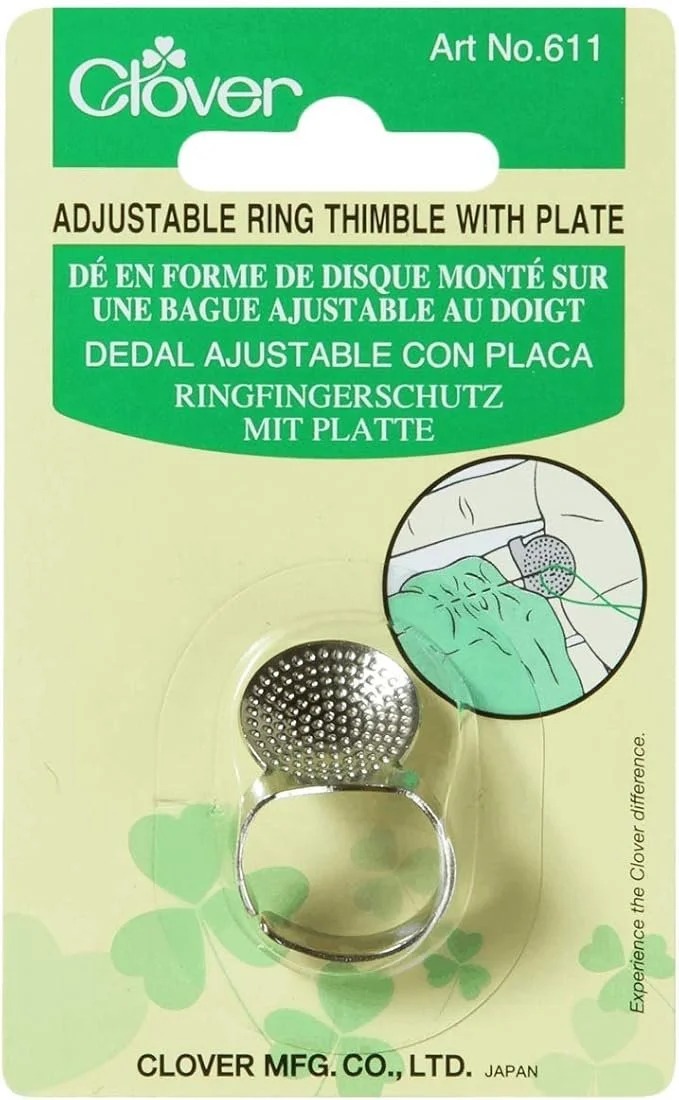
Clover Ring Thimble, linked on Amazon
When most people think of sewing, they picture a small metal thimble worn on the tip of a finger. Sashiko is different. Instead of shielding the fingertip, the sashiko thimble rests at the base of the middle finger or along the palm. At first glance, it looks unusual — a curved band of metal or leather with a little plate of dimples, almost like jewelry more than a tool.
When I first tried using one, I was skeptical. The position felt awkward. The tool seemed unnecessary. Couldn’t I just push the needle through the fabric the way I always had? Sashiko quickly humbled me. Gathering several stitches onto a long needle requires leverage, and that little palm protector changes everything.
With the thimble in place, I found that my stitches began to flow. Instead of forcing each one through with muscle, I could glide the needle along, resting it against the thimble’s surface, letting the dimples guide the push. Suddenly, the work shifted from effort to rhythm. The needle became an extension of my hand, and the thimble (once so unfamiliar) became the quiet center of movement.
What looks like a humble scrap of metal or leather is, in truth, an object of design honed over centuries. Each curve, each dimple, carries the wisdom of generations who needed to sew not as a hobby, but as daily life and survival. Farmers’ wives, fisherfolk, and villagers in snowy regions of Japan used this exact method, their palm thimbles enabling them to stitch durable layers of cloth to keep families warm through long winters.
Using the sashiko thimble is a reminder that tools are never just tools. The palm thimble doesn’t just help me stitch faster — it connects me to hands long before mine, hands that stitched by firelight, hands that made do and made beautiful.
Now, I can’t imagine sashiko without it. Every time I slip the thimble over my finger, I feel myself entering into that rhythm: push, gather, pull, repeat. The tool disappears, and all that remains is the stitch.