What I Learned Sitting Beside a Teacher

Kazue of Sashiko Lab in Kyoto, Japan
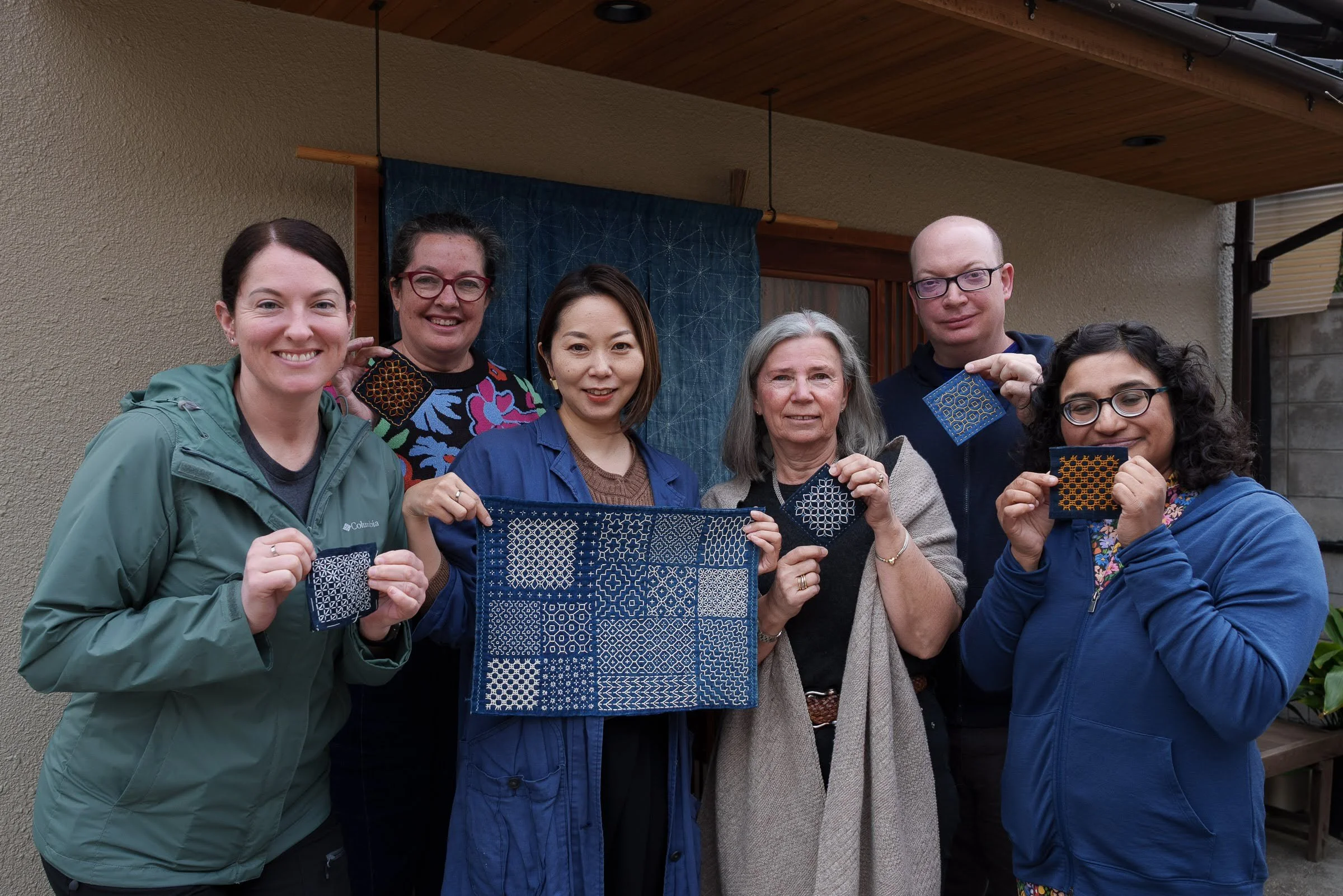
In March of 2025, I had the chance to sit in a quiet Kyoto workshop with Kazue of Sashiko Lab. The space was simple: sashiko screenprinting supplies stacked neatly behind a curtain, a cache of thread and notions glinting softly in the light, and the faint aroma of tea nearby. The room felt like it was holding its breath, waiting for the first stitch.
Kazue welcomed me not with long explanations but with gesture — an invitation to sit, to chat, to connect. However, what actually struck me most was what she didn’t say. She rarely corrected with words, but instead let me watch the subtle tilt of her needle, the way she gathered cloth, the small pause before pulling the thread through. The lesson was less about instruction and more about presence.
I realized quickly that sashiko isn’t something you can rush toward mastery in. It is a practice of accumulation — of patience, of repetition, of respect. Sitting beside Kazue, I understood that learning in sashiko is not about memorizing a technique but about absorbing a rhythm. It is about being attuned to cloth, to thread, to being present.
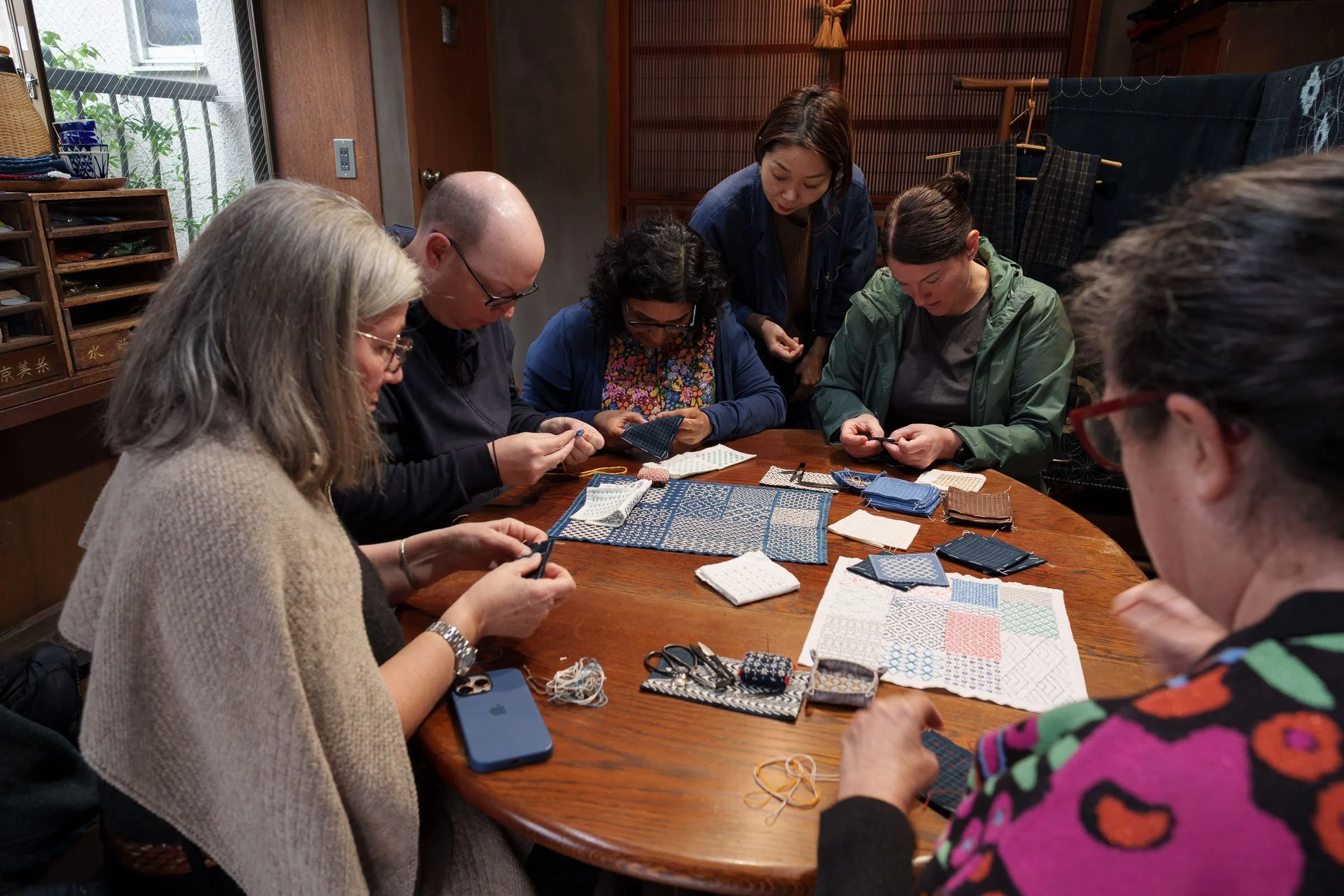
During a break, we spoke about why she continues this work. She described sashiko not as something to preserve in glass but as something to live with — in mending, in teaching, in carrying forward. Her words reminded me that every stitch links not just fabric, but people. By sitting with her, even for a short time, I was being woven into that fabric of continuity.
When I left the workshop, I carried with me more than a stitched coaster. I carried the quiet lesson that learning happens most deeply in company — in the closeness of sitting beside a teacher, watching, listening, and slowly finding your own rhythm.
That coaster is now displayed on the coffee table in my home in Oregon, but when I pick it up, I hear the echoes of Kyoto’s calm and Kazue’s patient guidance. The threads stretch farther than the fabric itself — across oceans, across cultures, across generations.