
Part 4: The Sashiko Japan Retreat
Part 4A — Chuo City: First Threads, First Gatherings
Chuo City was the soft beginning of the retreat—a gentle landing after twelve days of moving on my own rhythm. We settled in slowly, letting the pace shift from solitary exploration to shared purpose. Before any stitching began, we were invited into Keiko Futatsaya’s exhibition—Atsushi’s mother, whose work carries decades of practice, patience, and story.
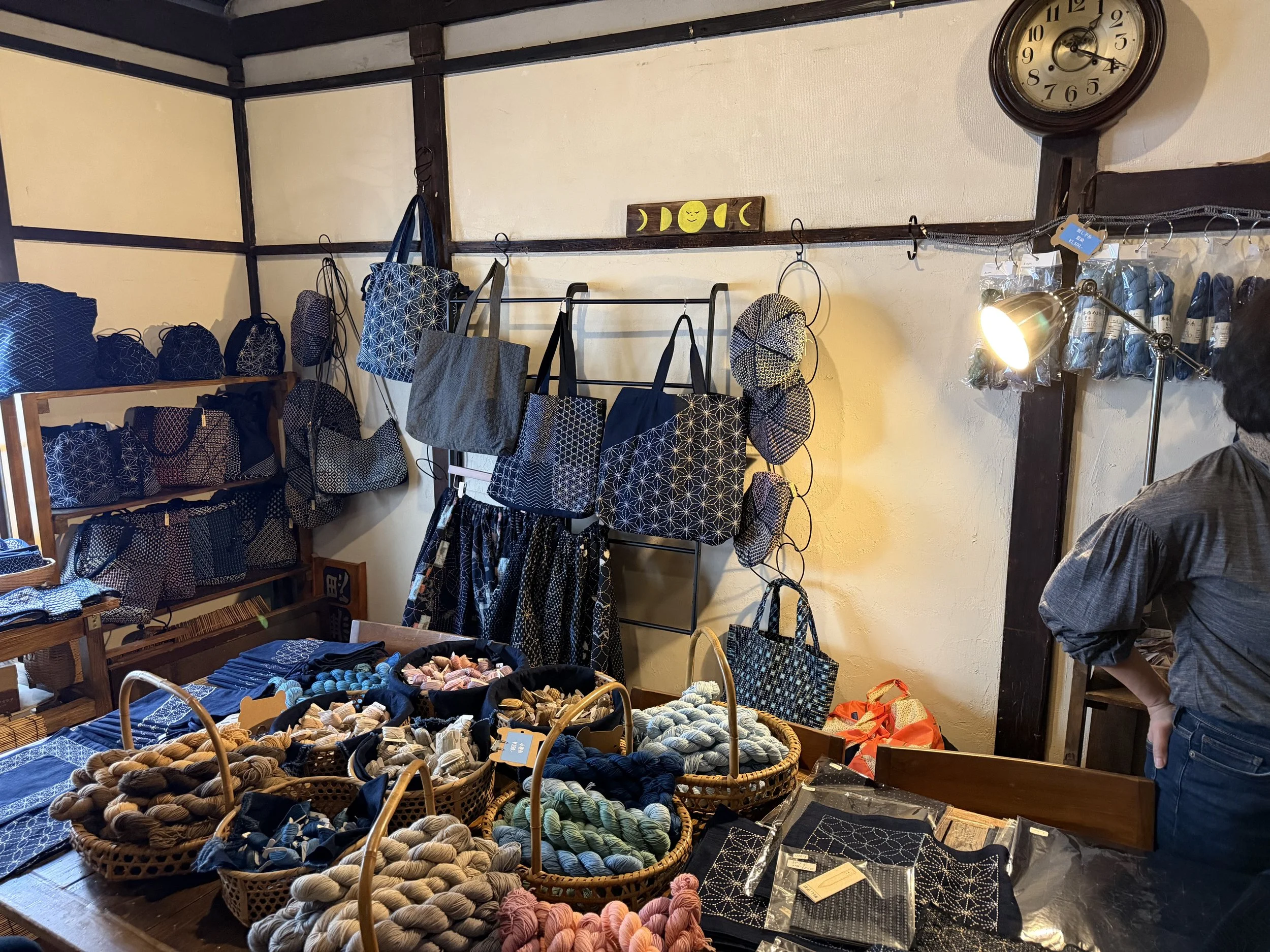
Keiko’s Exhibition, Tokyo
Walking through that room felt like stepping into the living memory of sashiko. Each piece held both precision and playfulness, an assurance that mastery and curiosity can—and should—coexist. I found myself lingering, absorbing the textures and quietly noting the stitching choices that spoke to me.
I was able to meet a few retreat participants that afternoon. There was an immediate sense of connection, the kind that forms when people gather around something they deeply love.
The next day, we entered the world of Koginzashi. Meeting 93-year-old Kogin master Takagi Sensei was a moment I’ll never forget. She was small in stature but carried a presence that filled the room—steady hands, thoughtful eyes, and a lifetime of attention stitched into her work. Learning from her and her fellow teachers felt like stepping directly into a lineage that most people only read about.
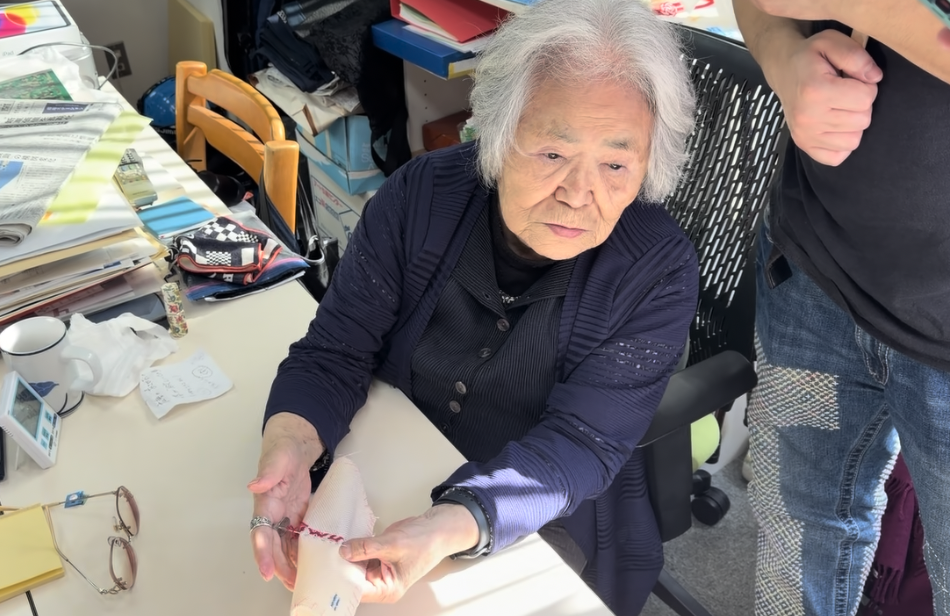
Takagi Sensei teaching and demonstrating Koginzashi
The workshop was challenging in the best way. Kogin is deliberate, mathematical, rhythmic. I compared it to cross-stitch, and I felt my fingers slow down as my mind sped up, trying to translate pattern into motion. Afterward, we explored the surrounding neighborhood—small shops, quiet streets, and a sense of calm woven into the city’s design.
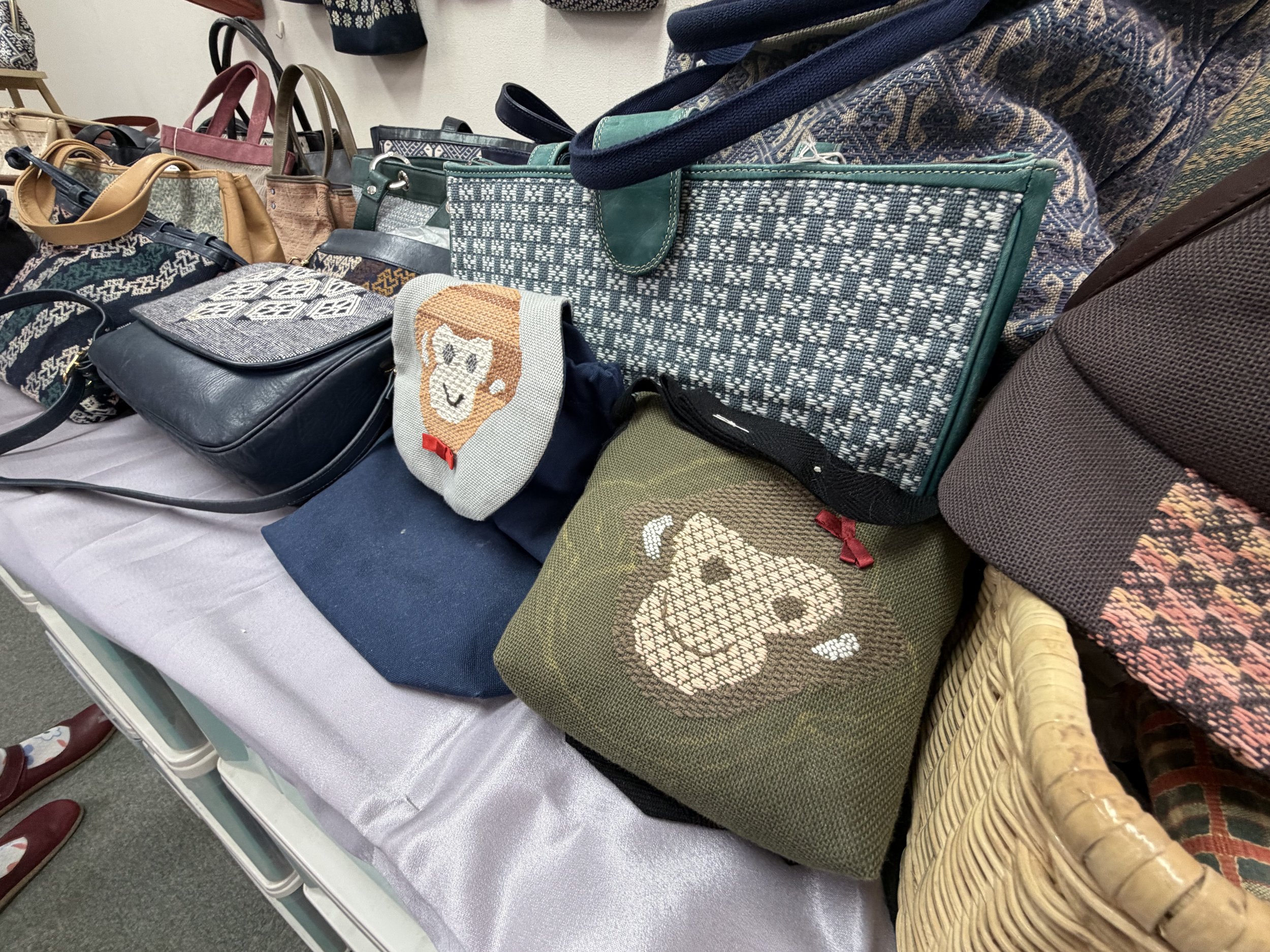
Examples of Kogin patterns being used in everyday objects
Part 4B — Shinjuku: Patterns, Grids, and New Ways of Seeing
Shinjuku added an entirely different energy—modern, layered, buzzing with momentum. It was the perfect backdrop for learning about pattern creation from Nana, one of Atsushi’s former students. Her style is inventive yet grounded, blending tradition with her own artistic voice.
She taught us how to map grids, how to imagine a pattern not just as something beautiful, but as something functional—something that breathes, repeats, and relates to the cloth beneath it. Watching her work reminded me of how sashiko is both design and dialogue. Every decision leads to another.
The following day, we joined a workshop with a widely published hitomezashi artist, whose work I had admired for years without expecting to learn from her in person. Hitomezashi has a different logic than the sashiko I typically practice—woven structures, dense patterns, and a sense of movement that grows line by line. The techniques were meticulous. I felt challenged, stretched, and delighted. We passed around sample pieces that revealed the intricacies of the stitches in ways photographs never could. Seeing them up close felt like deciphering a secret.
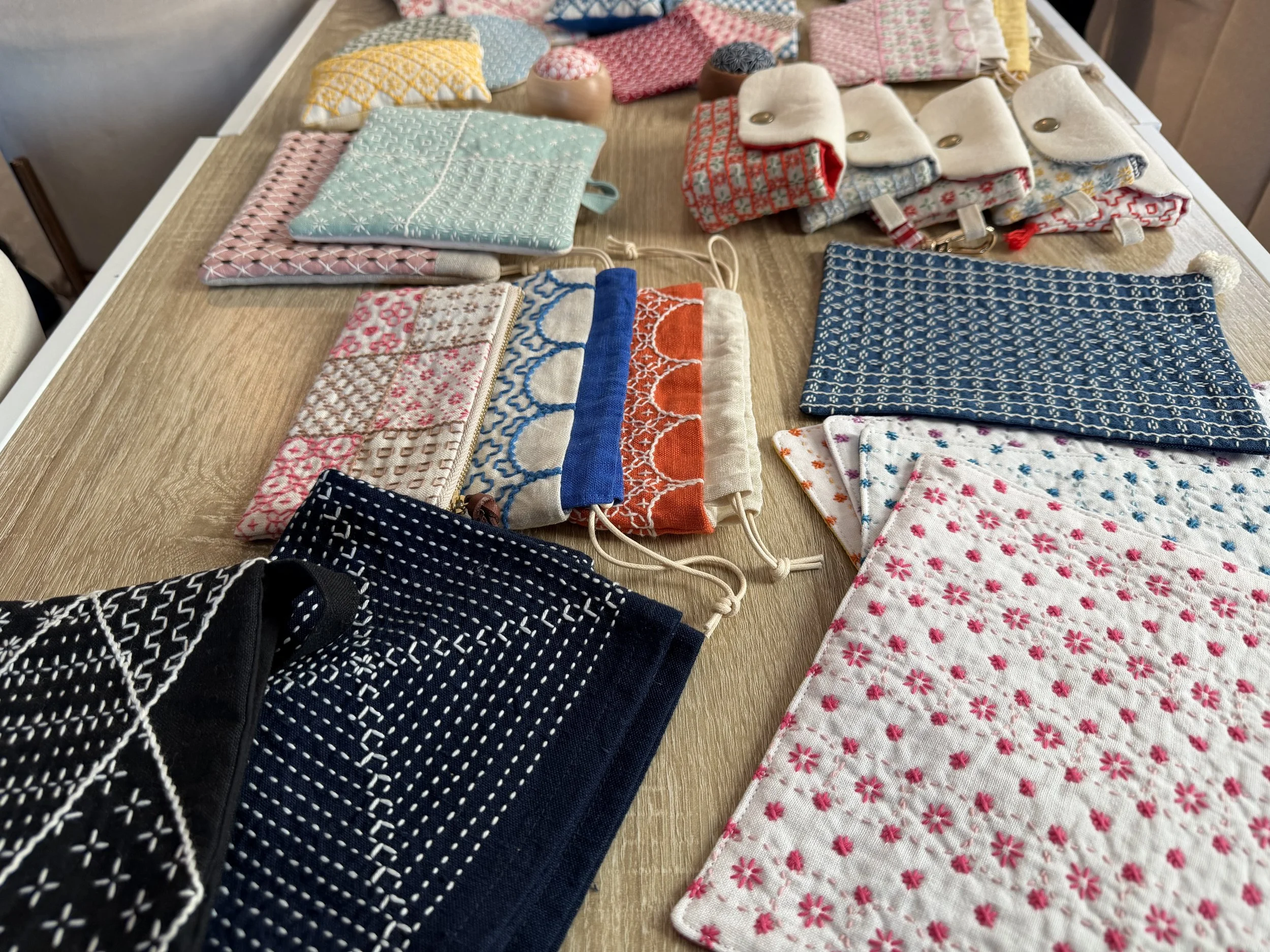
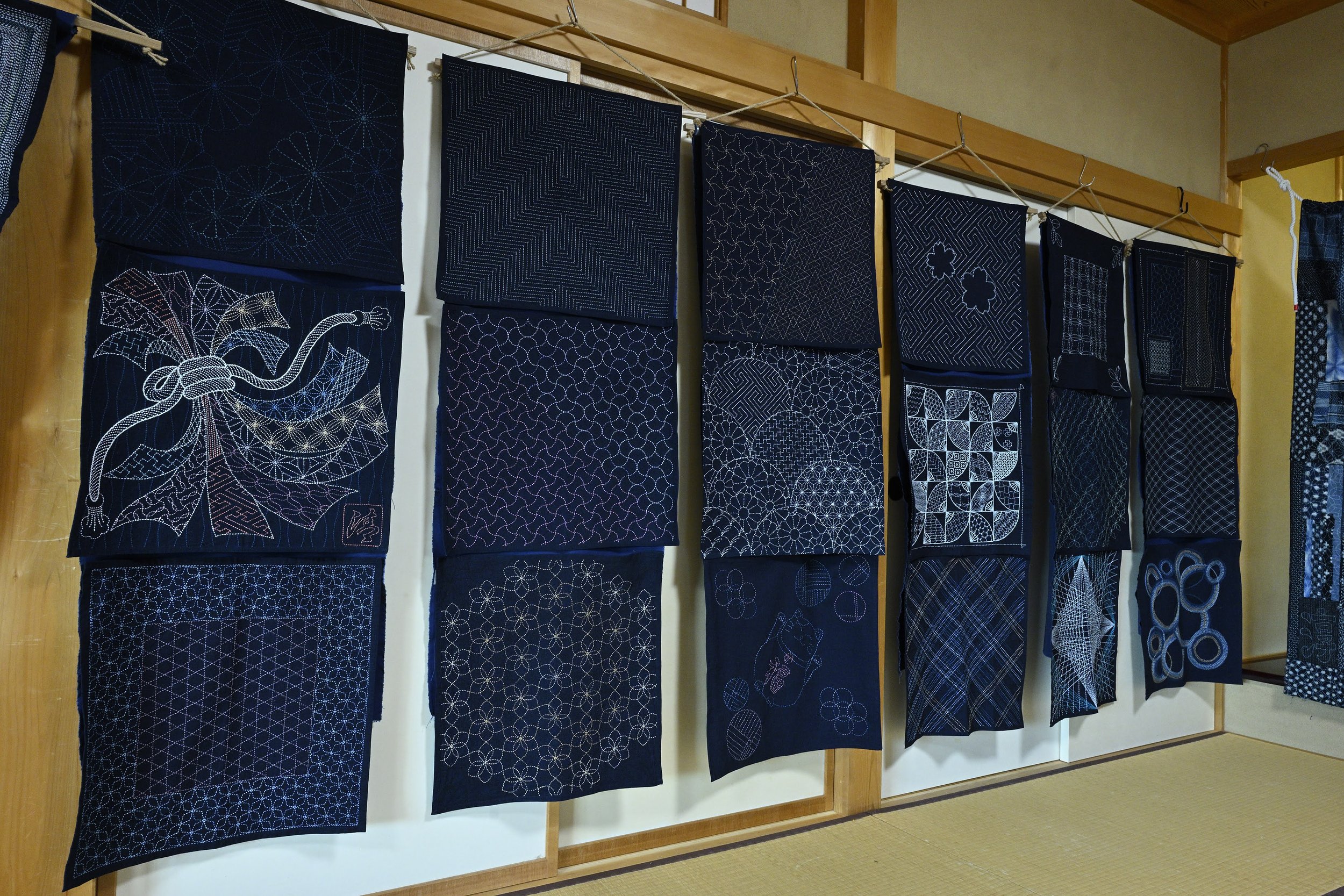
Sashiko samples featuring Hitomezashi stitching
Shinjuku was about expanding my toolkit, but also my imagination—realizing how much possibility exists within a single grid.
Part 4C — Takayama: Depth, Discovery, and Shared Creativity
Takayama was where the retreat truly deepened. The pace slowed, the mountains framed the days, and the workshops took on a more intimate, spacious feeling.
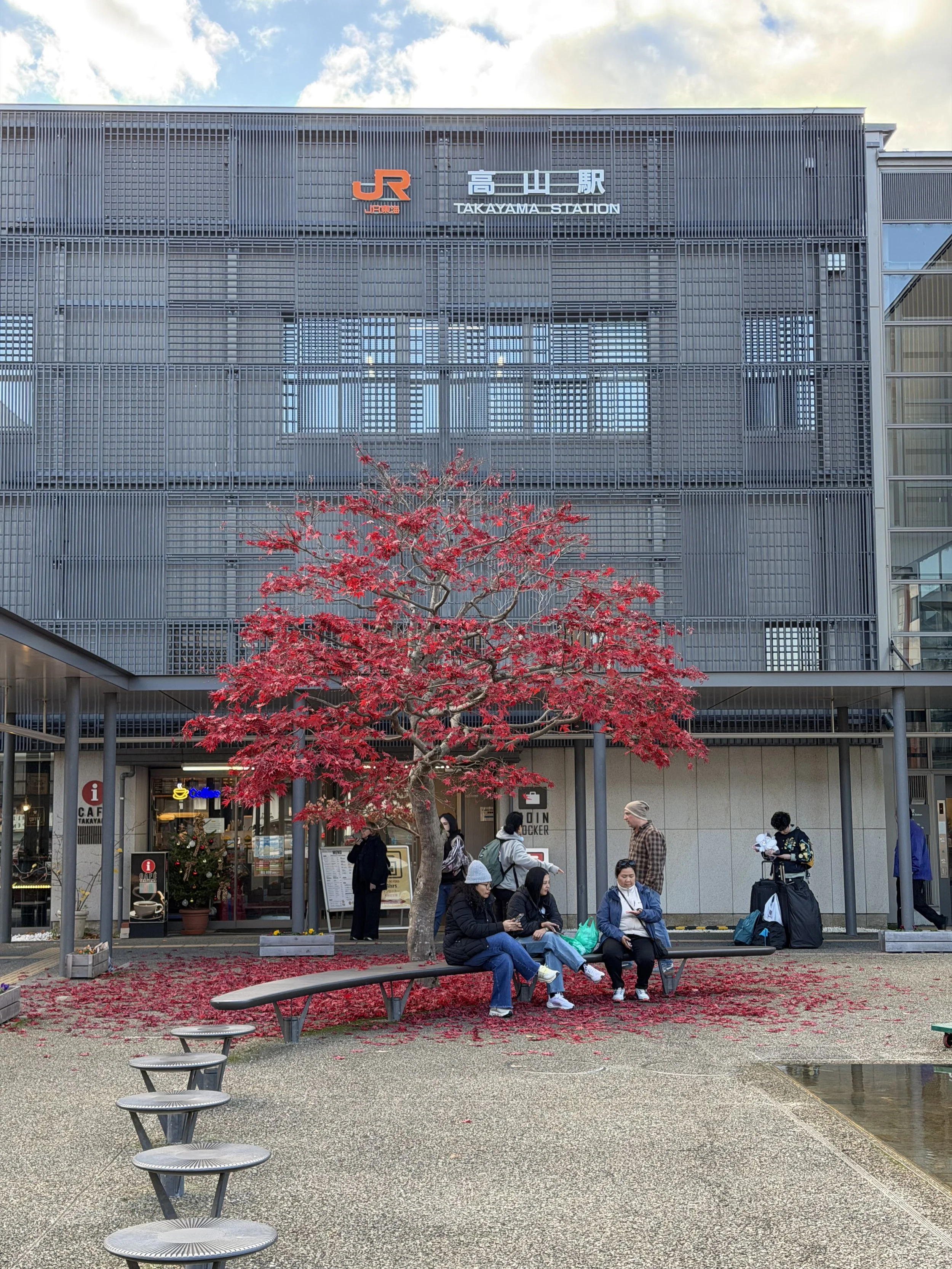
Takayama Station, Takayama, Gifu Prefecture
We began with a boro workshop from Keiko Futatsaya, whose generosity is matched only by her skill. She provided fabrics—soft, worn, full of history—and guided us through various approaches to layering and mending. Boro is more than technique; it’s philosophy. It asks you to honor what exists, to reuse, to repair, to reimagine. Working on my own project, surrounded by others doing the same, felt like a quiet act of connection across time.
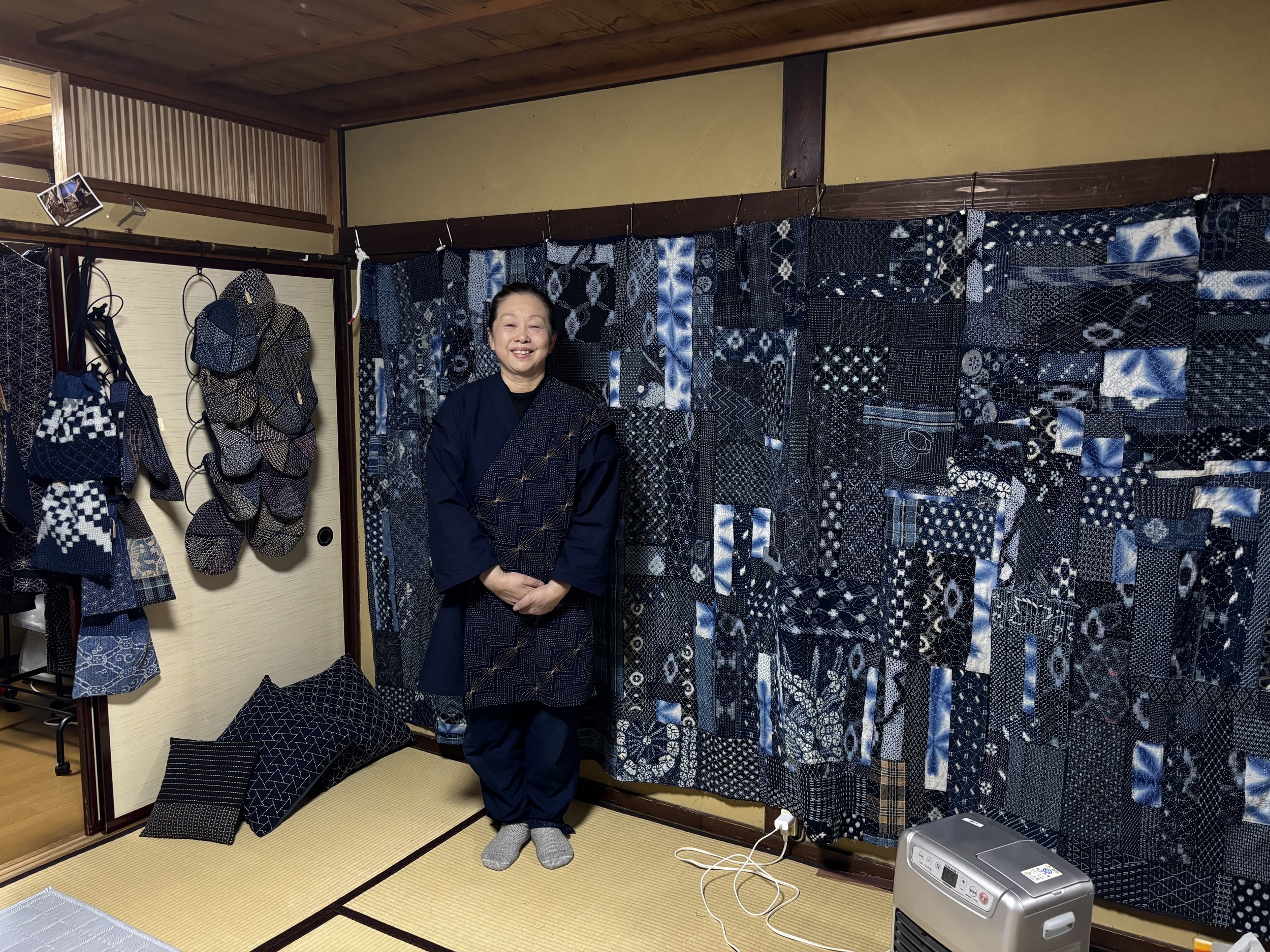
Keiko Futatsaya
Then came a kogin workshop with Keiko Sakamoto, a historian of the style. Her presentation shed new light on the cultural roots of kogin: why it emerged, how it evolved within the different regions, and how its patterns communicate more than decoration. Practicing with the kogin fabric she supplied felt like grounding what she taught us—head knowledge stitched into hand knowledge.
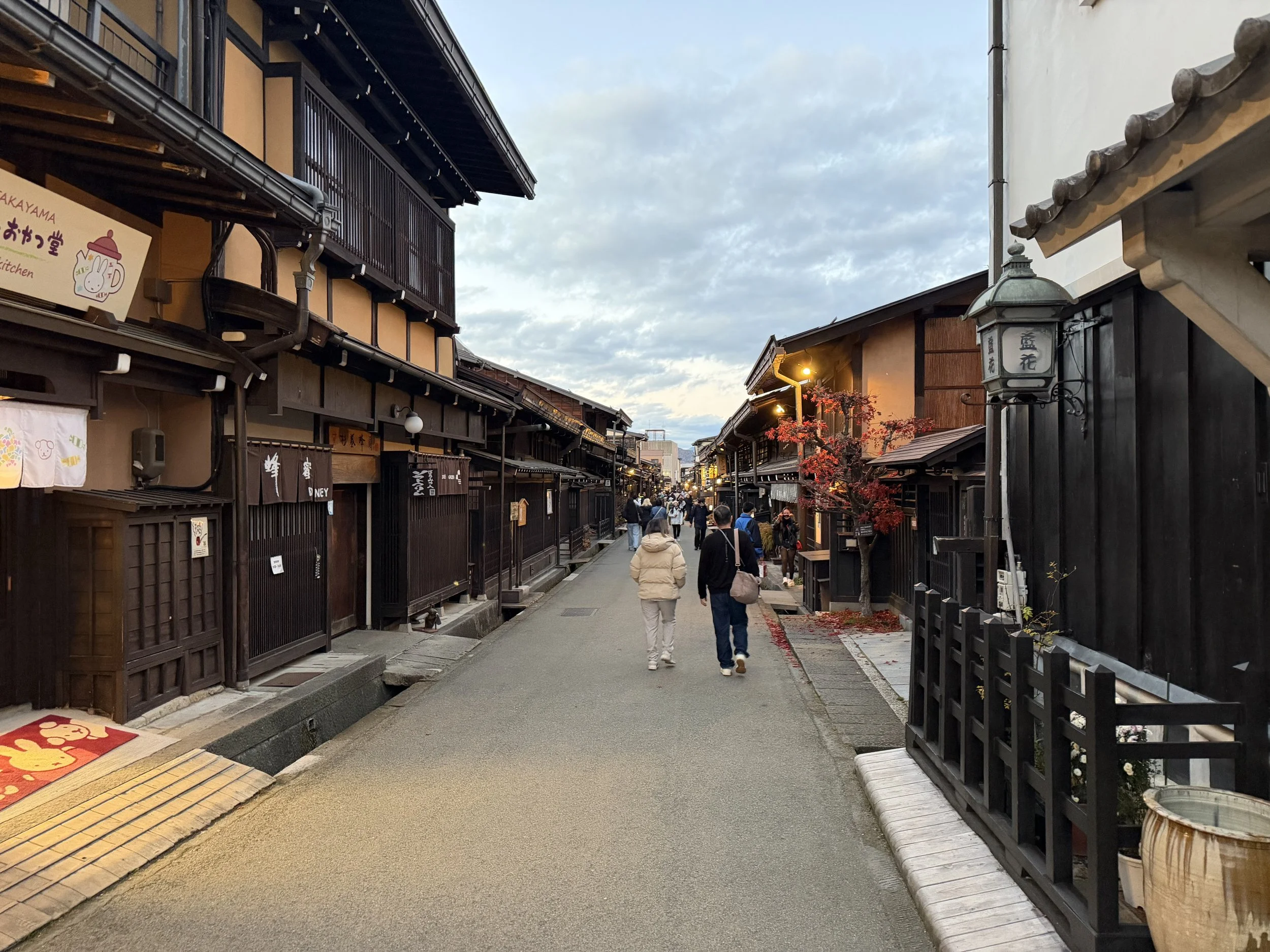
Old Takayama, Gifu Prefecture
The Furoshiki Exhibition was one of the most moving experiences of the retreat. Nearly forty pieces hung together in brilliant variety. I was in awe of the creativity of the Japanese stitchers—and surprised, humbled, and grateful when they expressed awe at my own piece. That exchange, navigated partly through Google Translate and partly through the universal language of gratitude, felt like the clearest embodiment of “Parallel Threads.”
We closed the evening with a shared dinner, passing stories and sentiments with equal warmth.
Our visit to Hida no Sato, the folk village, placed everything into a historical landscape. Traditional houses, tools, and textiles formed a backdrop to the craft we’d been practicing. Being photographed in Keiko’s handmade jackets added a playful, personal touch—like stepping into the past without losing sight of the present.
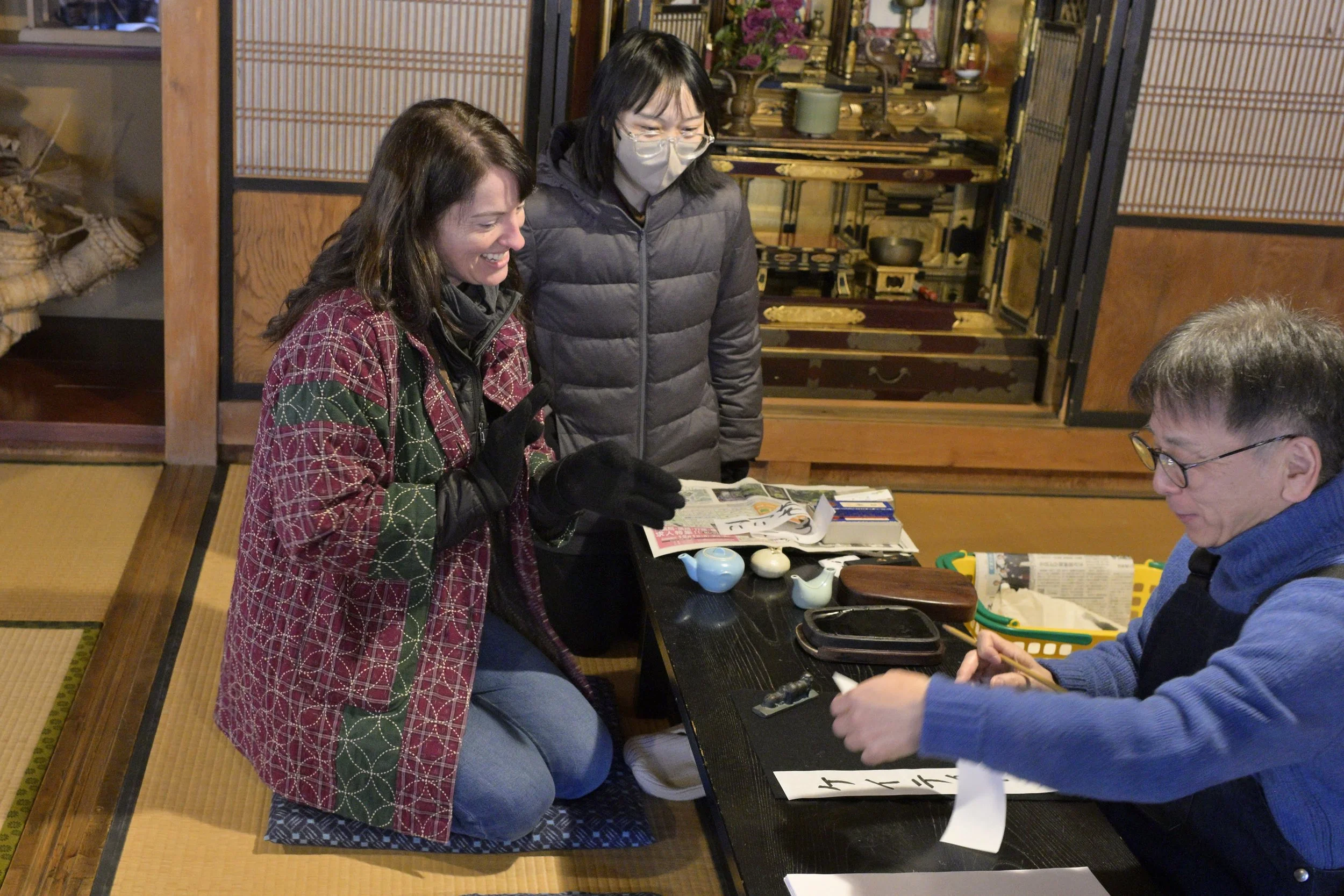
Calligraphy House, Hida no Sato, Takayama, Gifu Prefecture
Takayama was where learning became understanding.
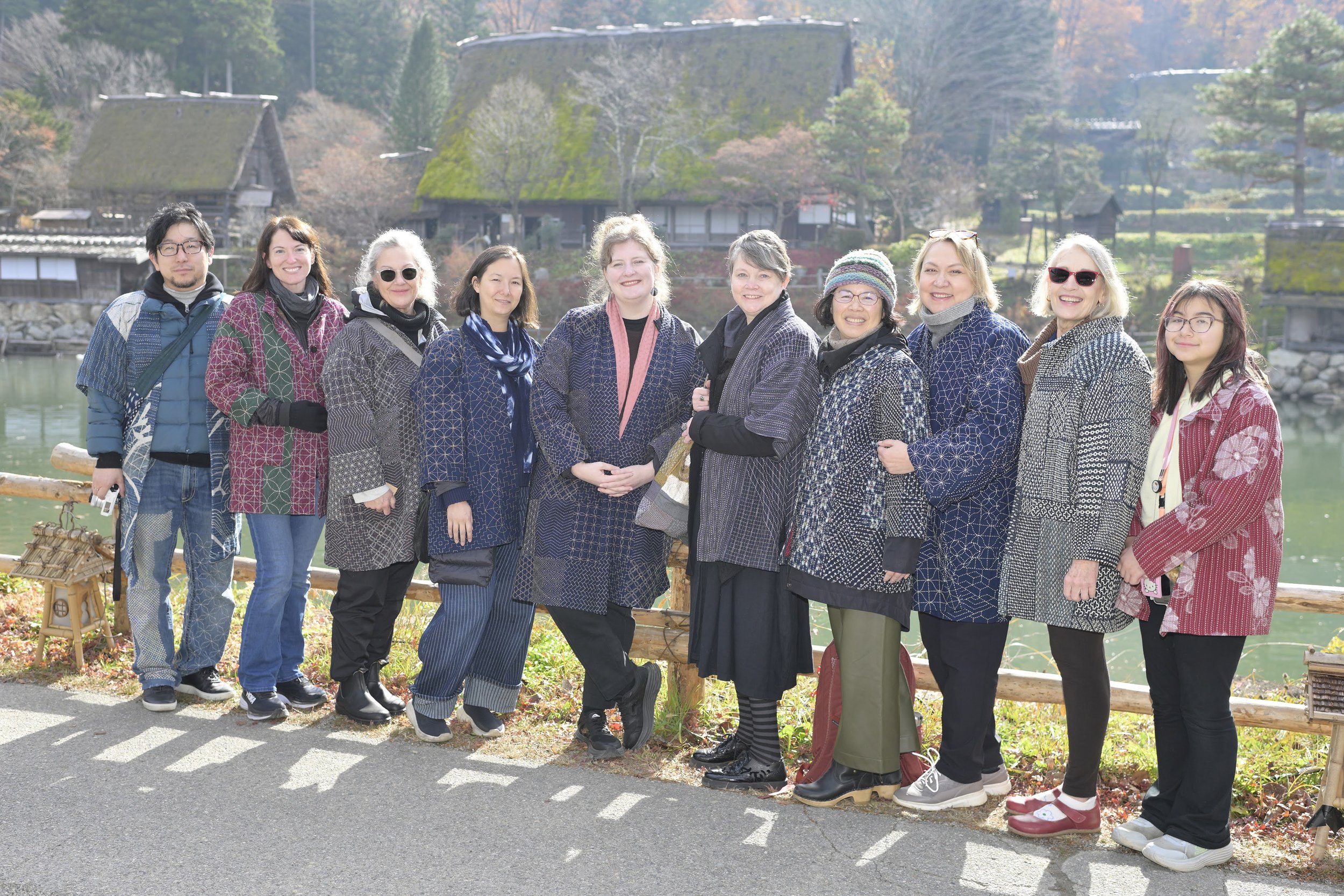
Hida no Sato, Takayama, Gifu Prefecture
Part 4D — Omiya: Contemporary Threads and the Future of Kogin and Sashiko
Omiya shifted the focus yet again—this time toward innovation. We were welcomed into the home of someone we had previously met, and this warmth set the tone for the day. Here, we explored modern Kogin, experimenting with updated patterns, colors, and compositions. It was refreshing to see how tradition can evolve without losing its integrity.
Later, a student artisan from Kogin.Net visited to share the Kogin.Net portfolio. Her work showed how kogin and modern sashiko are weaving themselves into contemporary design and even architecture. Seeing these stitches—once tools of survival—now shaping modern aesthetics felt like witnessing the craft’s next chapter.
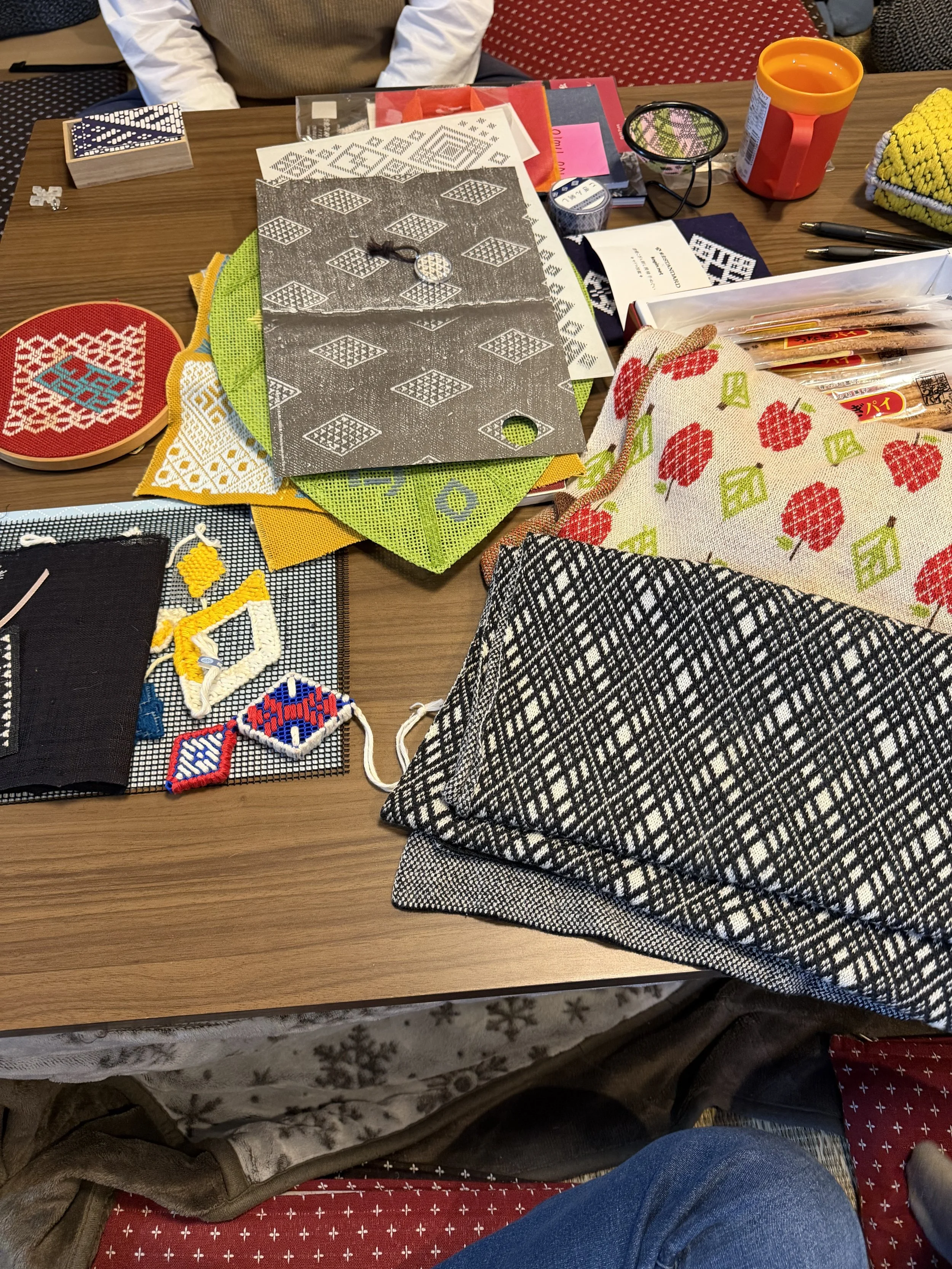
Kogin.net sample works, Omiya, Tokyo Prefecture
Omiya reminded me that sashiko is not static. It grows, adapts, collaborates. It holds its history while reaching toward something new.