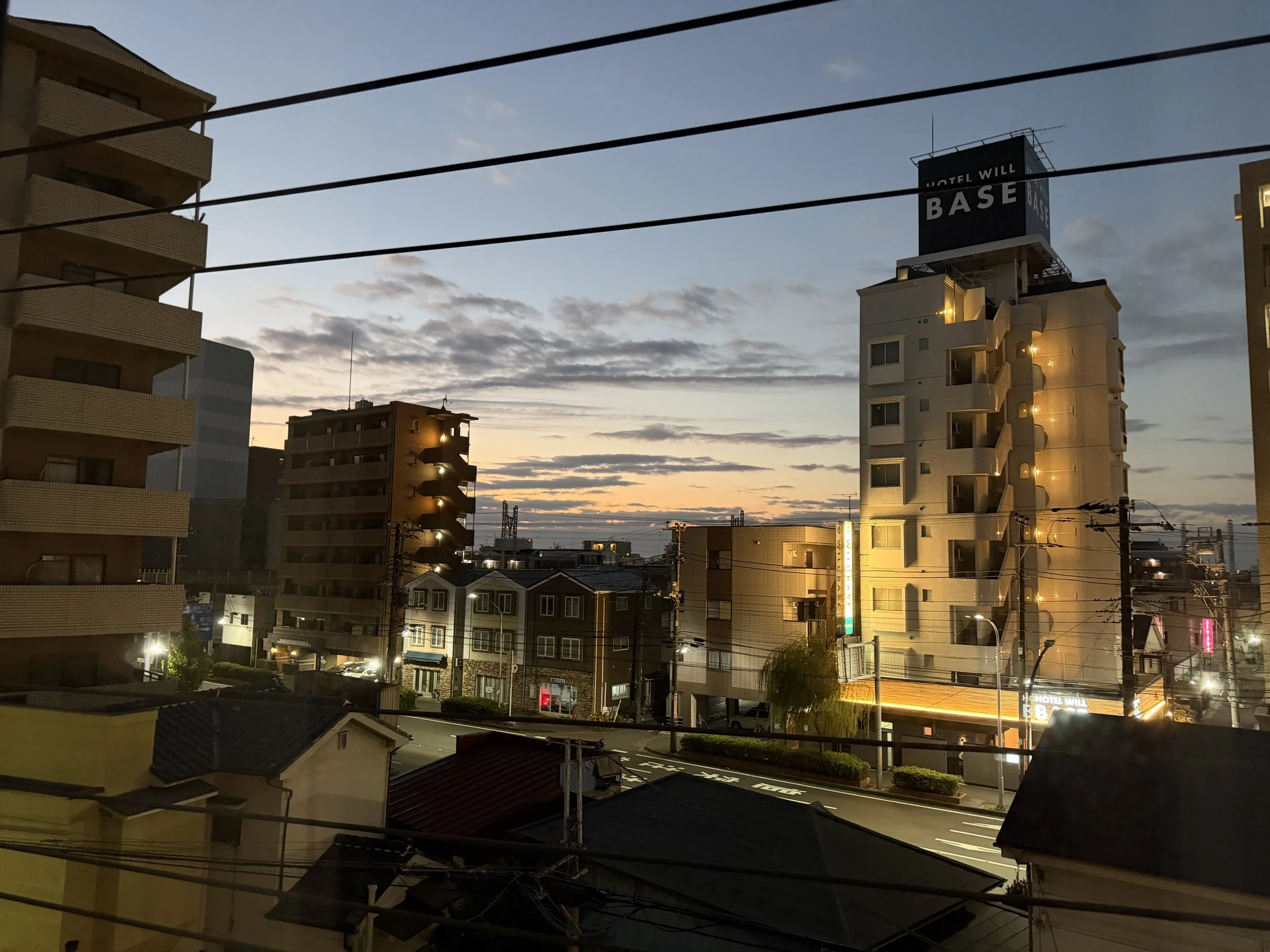
Part 3: Traveling Alone, Finding My Thread
Traveling solo through Japan surprised me in ways I didn’t expect. I set off with a rough itinerary and a willingness to wander, but what unfolded was a quiet, deeply personal stretch of days where Sashiko kept reappearing—sometimes intentionally, sometimes as a gift, sometimes as an unexpected connection that reminded me how craft can stitch people together across language and distance.
Day 3 – Jōmō-Kōgen & Takumi no Sato
This was the day I took my first taxi alone, which felt like a milestone for reasons I still can’t fully articulate. I spent the morning wandering Takuminosato, a village where craft and daily life blend seamlessly. I walked through the trees, listened to children on a school field trip discover the place with wide eyes, and felt myself settling into a slower rhythm. It wasn’t directly connected to Sashiko, but it grounded me—like preparing the fabric before stitching.
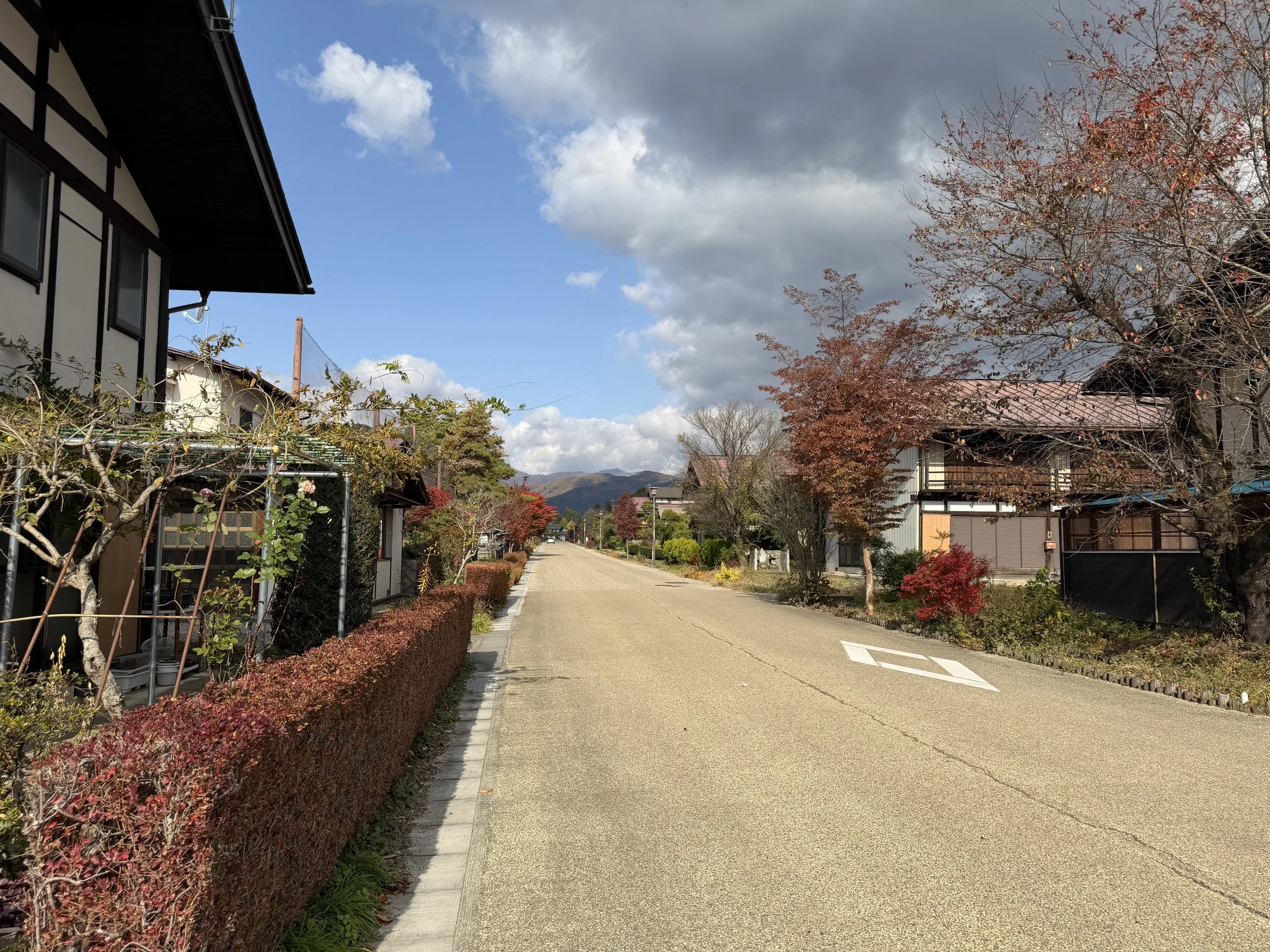
Takumi no Sato, Minakami Town, Gunma Prefecture
Day 4 – Nandō & the Sashiko-kan (Ginza Akie Museum)
If Day 3 grounded me, Day 4 cracked something open. Visiting Ginza Akie's Sashiko Museum—an entire home overflowing with her work—was overwhelming in the most beautiful way. The scale, the history, the discipline behind every stitch made me rethink what “handwork” means. I met members of her family, who were gracious, warm, and clearly proud to share her legacy. Navigating the train and bus systems by myself to get there felt like a small act of courage. Leaving the museum, I realized I was carrying not just inspiration, but responsibility—to honor the tradition with care.
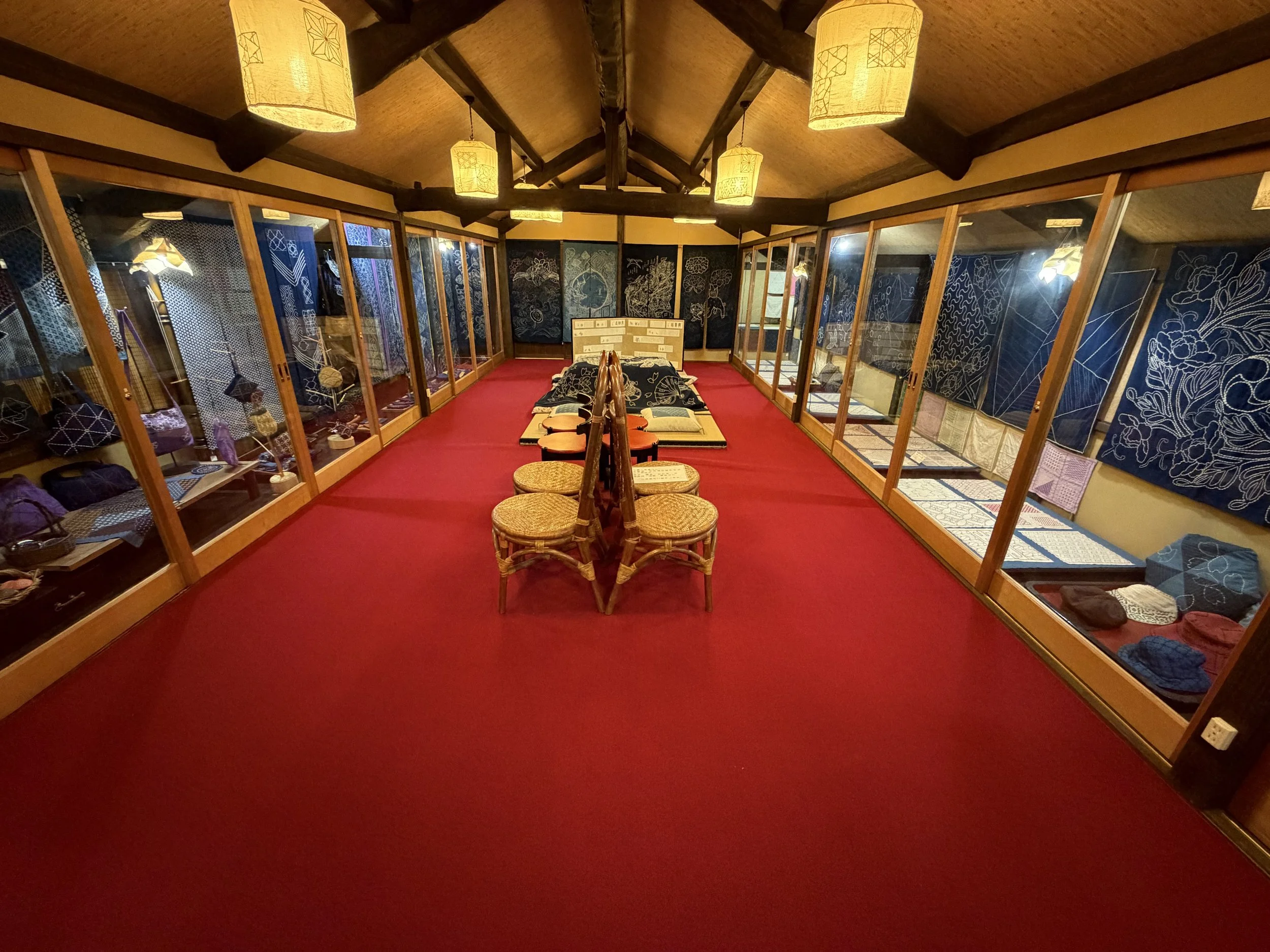
Ginza Akie Sashiko-kan Hall, Hinohara Village, Tokyo Prefecture
Day 6 – Kitakyushu Museum of Natural History & Human History
By Day 6, my mind had been so immersed in sashiko—its textures, its history, its people—that stepping into the Kitakyushu Museum of Natural History & Human History felt like widening the lens. The exhibits were sweeping and expansive: fossils, reconstructed habitats, stories of how humans shaped and were shaped by the land. It was a shift from thread and cloth to stone and earth, but somehow it all felt connected.
I found myself lingering over the sections about everyday tools and early forms of adornment—objects made by hands, long before anyone called it “craft.” There was a familiar comfort in that: the idea that humans have always made things not just for survival, but for meaning.
It wasn’t a day specifically about sashiko, but it still nudged me into thinking about the deeper impulses behind the work: the desire to repair, to record, to leave something behind.
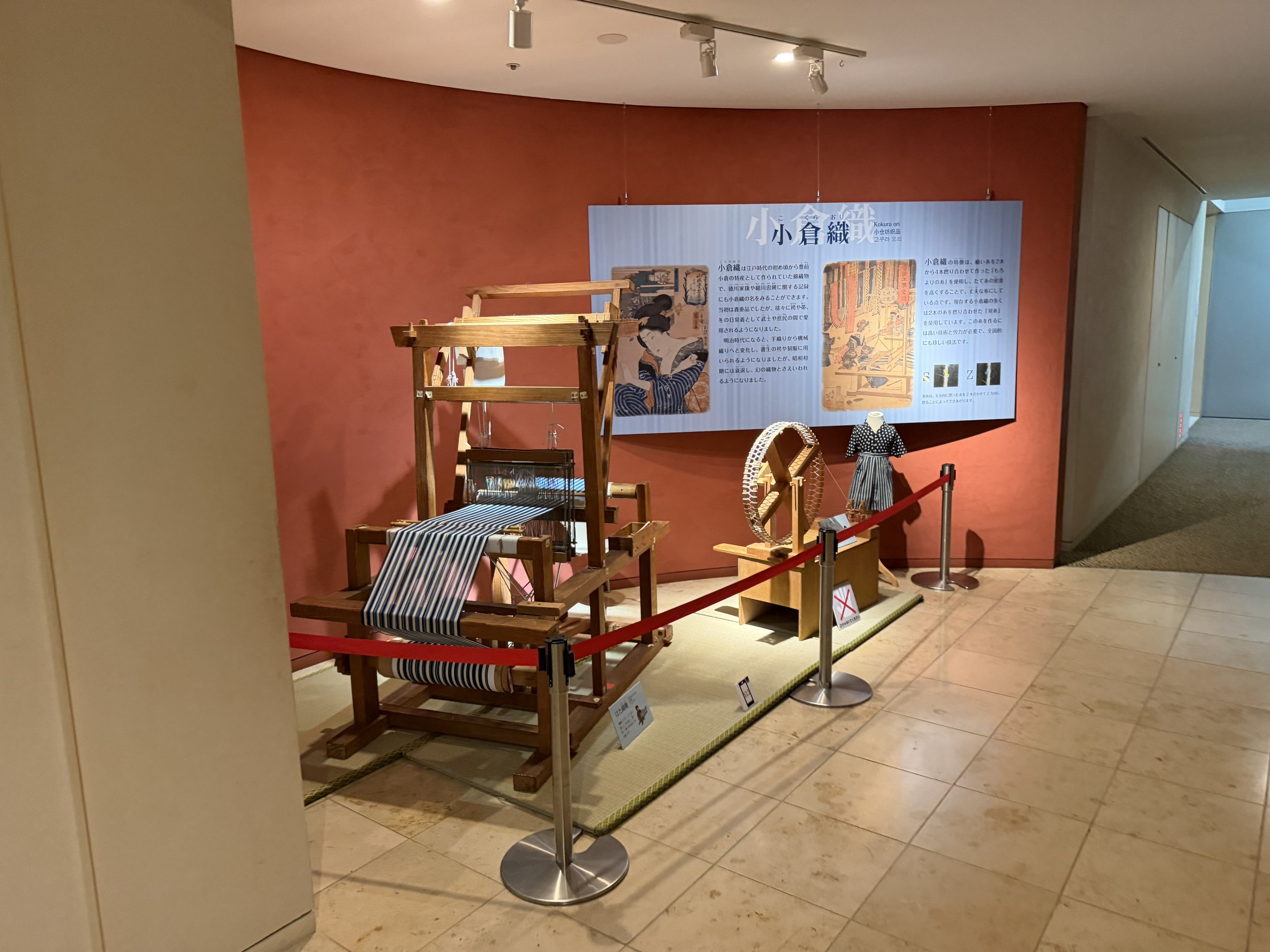
Kitakyushu Museum of Natural History & Human History, Kitakyushu City, Fukuoka Prefecture
Day 7 – Takachiho (and the Sea of Clouds that wasn’t)
The next part of my journey took me from Fukuoka down to Miyazaki. My original intent was to spend the early-morning hours viewing the “Sea of Clouds” phenomenon that happens in the cool autumnal mornings when the cloud cover hangs low over the city, and spectators can view from higher vantage points. The weather didn’t cooperate, but it didn’t matter. The homestay family I stayed with made the experience unforgettable. When my host learned about my love of Sashiko, she quietly brought out two samplers her mother had stitched—and gifted them to me without hesitation. I still don’t know how to express how moving that was.
Later that day, while window shopping, I met an older woman whose adult son now lives in Washington. With the help of Google Translate, we discovered a handful of shared threads—family, home, craft. She invited me into her house so that she could show me her own Sashiko pieces: table runners, jackets, a history of her hands and her family’s. We exchanged information, and I left feeling that I had stepped into a tiny pocket of community that I hadn’t expected to find.
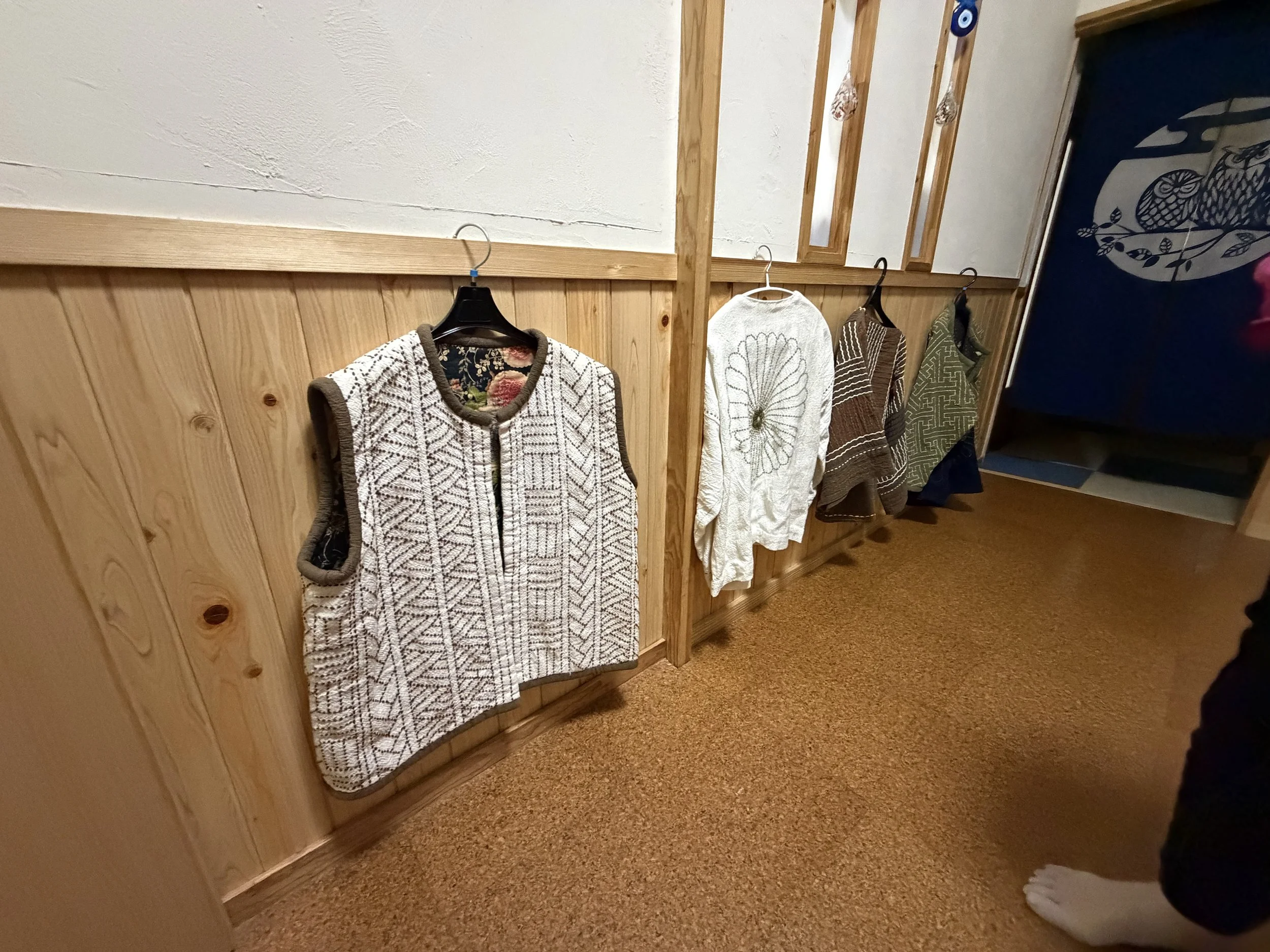
Sashiko works from my new friend in Takachiho, Miyazaki Prefecture, Kyushu
Day 8 – Kyoto Lessons with My Teacher
Returning to my Kyoto teacher felt like coming home. I took two classes with her that day, and she shared more about her growing business and her plans to open a larger atelier. I loved hearing about her expansion—not just because I admire her, but because seeing someone build a life around this craft made my own aspirations feel more possible.
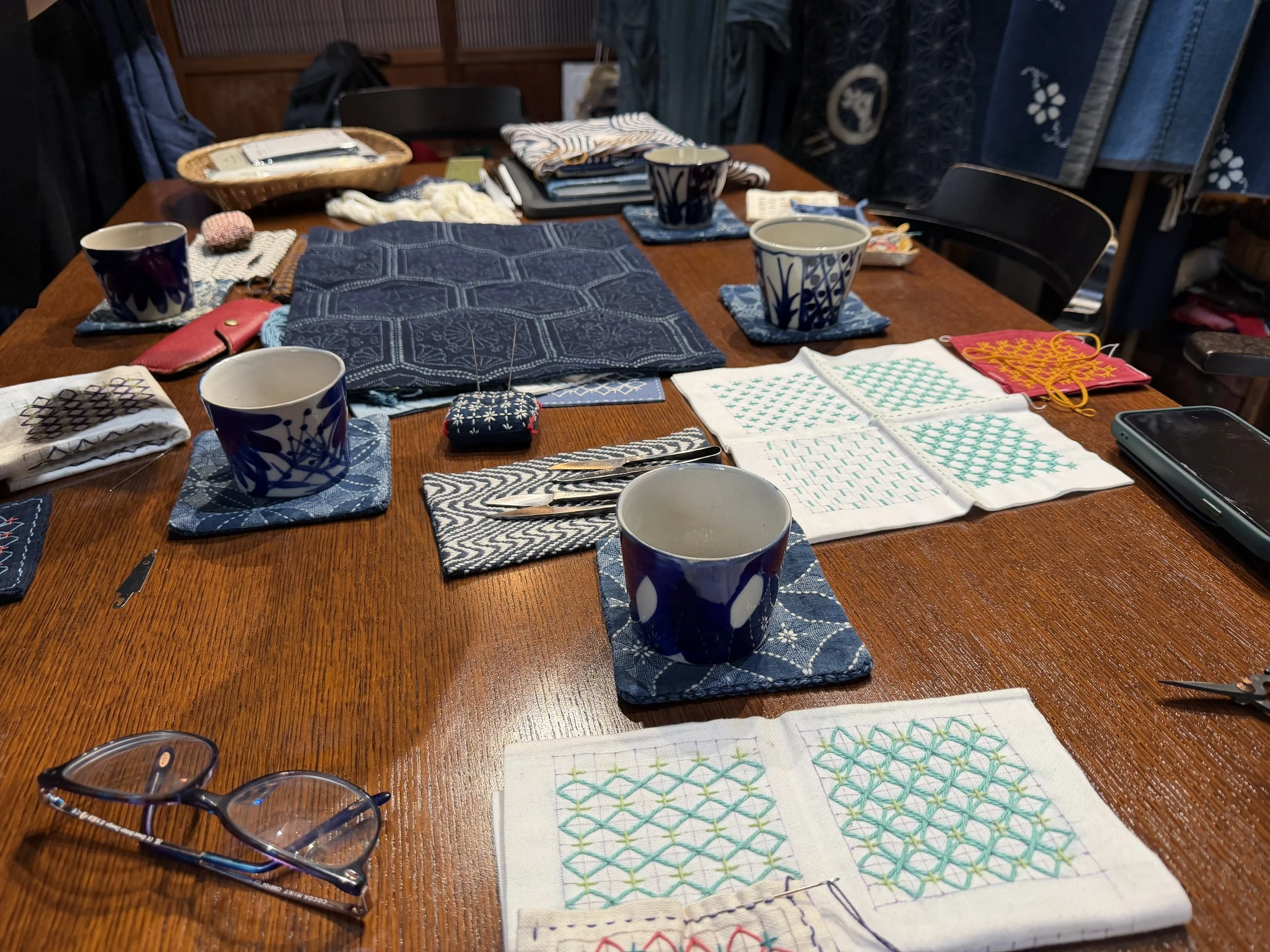
Sashiko.Lab Classroom & Atelier, Kyoto
Day 10 – A Day of Teachers
In the morning, my Kyoto teacher took me on a small craft tour, showing me where to find the threads, fabrics, and tools that aren’t always obvious to visitors.
In the afternoon, I traveled to Osaka for a class with a new teacher. The other students had rescheduled, so I ended up with a private one-on-one session. We talked for hours—about technique, about why we stitch, about the way craft opens people up. They walked me through their workspace and indigo dyeing process, and by the time I left, we felt like old friends.
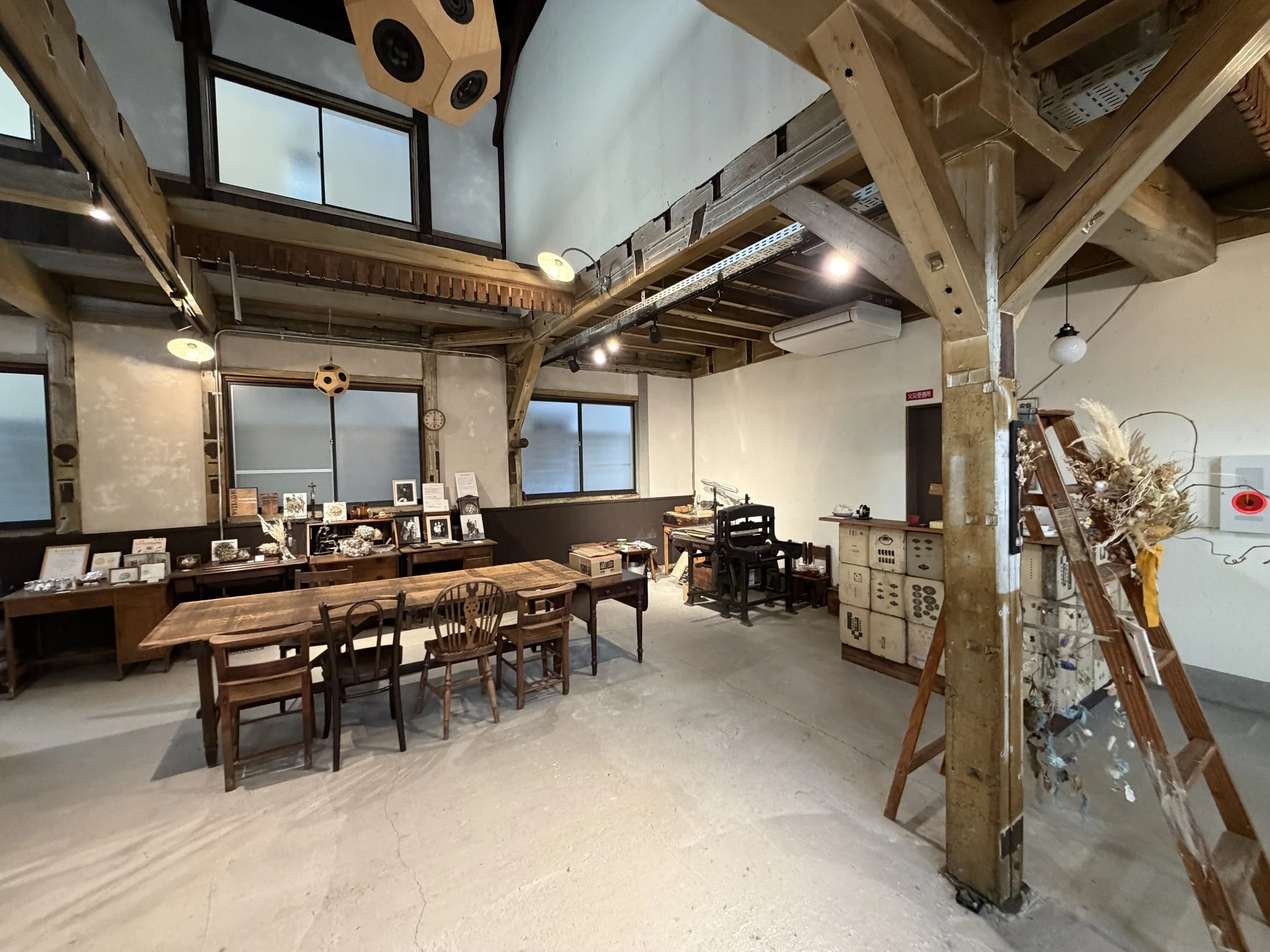
JunAle Sashiko Studio, Osaka
Day 11 – Tokyo Flea Market
Back in Tokyo, I wandered a flea market and happened upon a vendor selling vintage Sashiko pieces. They were musty, worn, imperfect—exactly the kind of artifacts that remind you that Sashiko started as a necessity, a way of mending and reinforcing. I felt excited thinking of how I could use these pieces to help others understand the history behind the contemporary aesthetics.
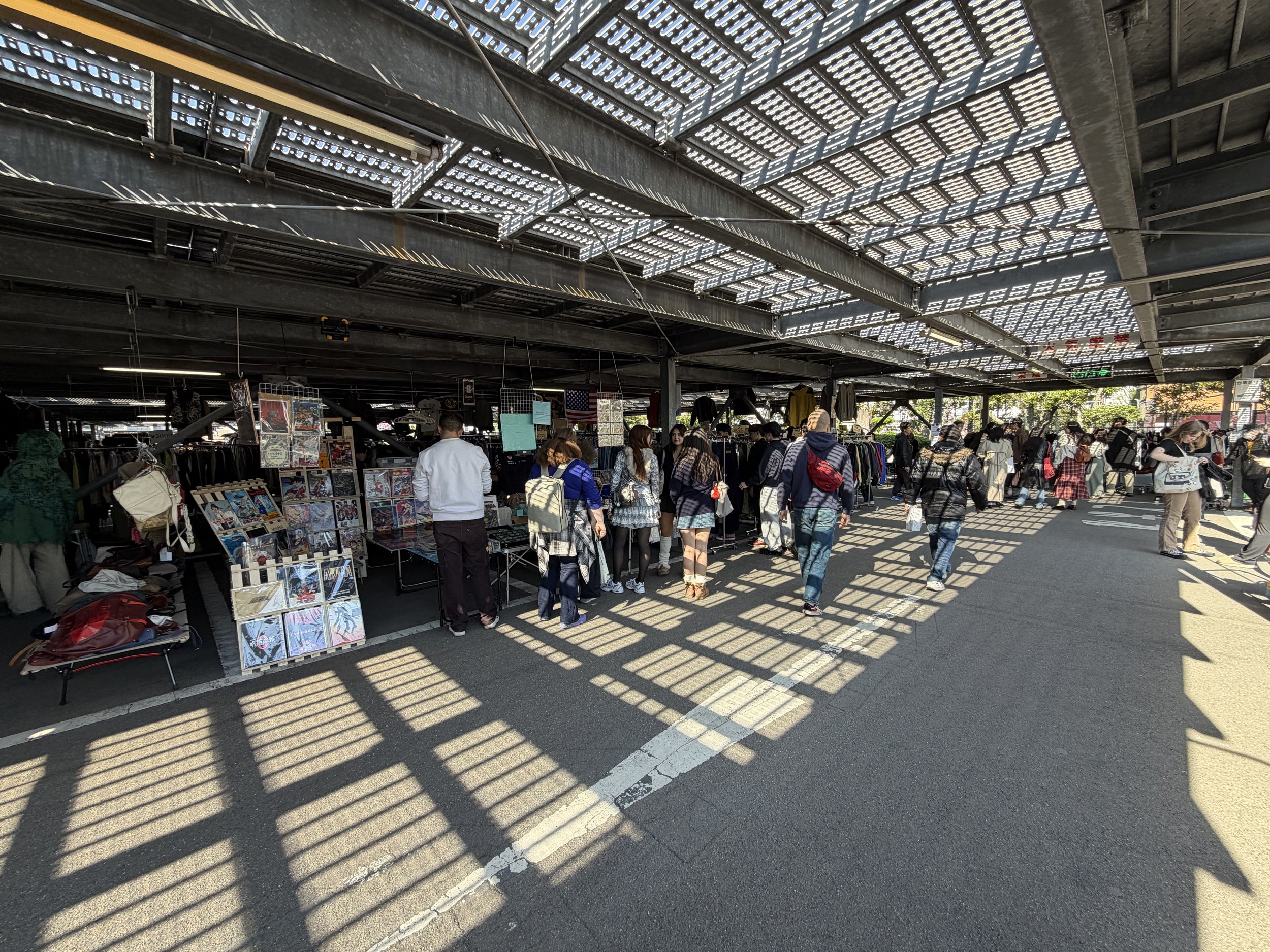
Ohi Racecourse Flea Market, Tokyo
Day 12 – Arrival for the Retreat ("Day 0")
Day 12 felt like a hinge—one of those rare mornings where nothing is required of you yet, but everything you’ve lived in the days prior is suddenly very present. I woke up realizing how much had happened in a short span of time: the remote villages, the museums, the teachers, the unexpected friendships, the moments when I felt uncertain and the ones when I surprised myself.
Before stepping into the rhythm of the retreat, I let myself linger in that in-between space. I didn’t need to rush, or prove anything, or chart another train route. It was the first morning where I could simply sit with all the small acts of bravery and curiosity that had carried me across the country.
It felt like the end of a journey I made on my own terms—and the quiet beginning of whatever would come next.