
My First Sashiko Project
What I Learned Before I Knew What I Was Doing
I didn’t begin sashiko with confidence or clarity. I began with curiosity and a lot of misunderstanding.
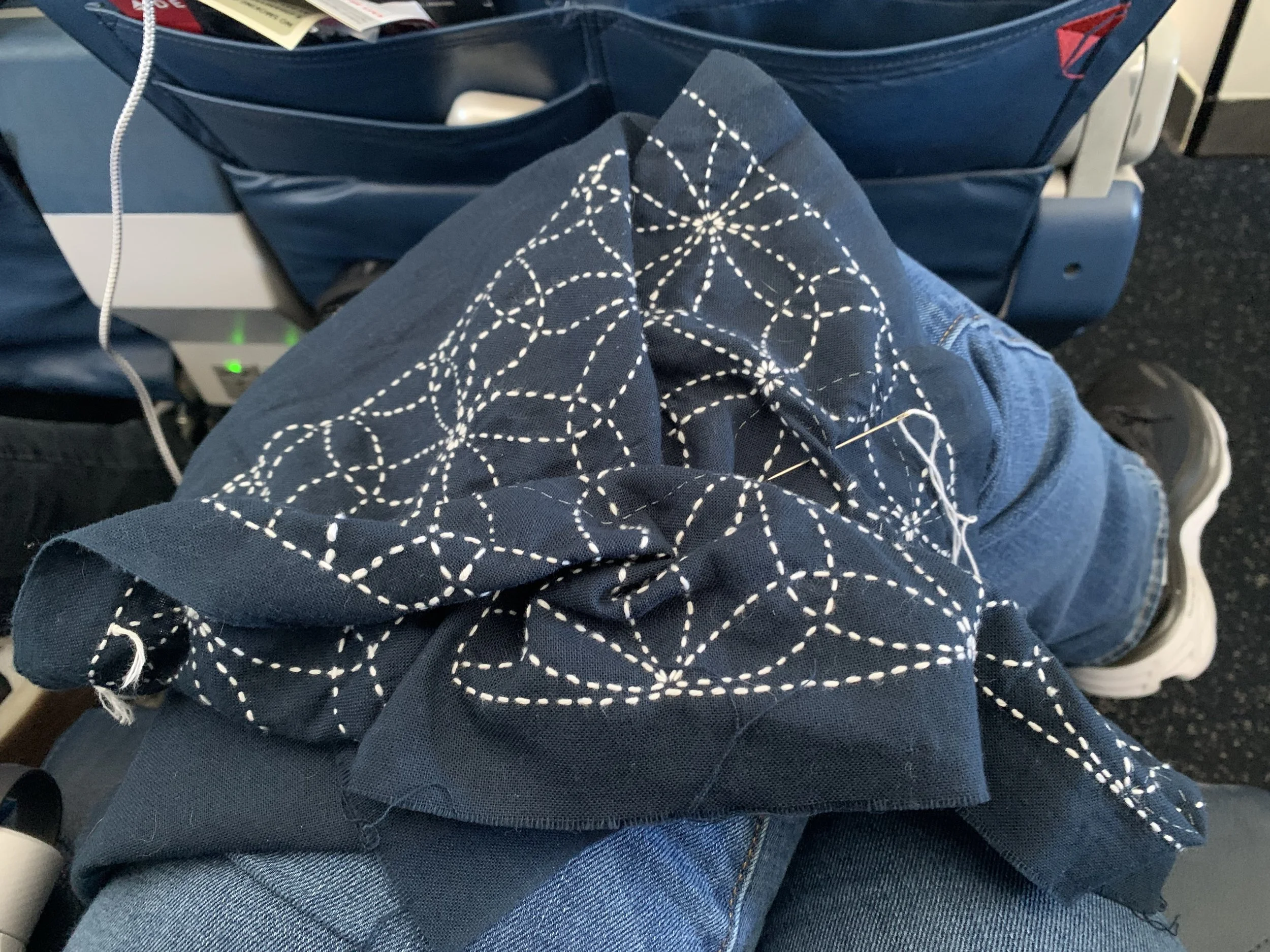
Years before I ever truly learned sashiko, I had purchased a few Olympus sample towels. I was aware of sashiko, drawn to the look and the philosophy, but I didn’t yet know any of the techniques. The sample packs sat quietly until COVID, when time stretched differently, and I finally pulled them out.
Without guidance, I treated sashiko the way I understood embroidery. I worked with a short length of thread, pulled my needle all the way through the fabric for every single stitch, and approached the cloth as a series of individual movements rather than a continuous relationship.
Each stitch was its own event. Insert needle. Pull. Reset. Repeat. It was painstakingly slow. Dare I say it was the slowest handwork I had ever done. There was no rhythm, no flow, and no sense of momentum. Just a repeated stabbing motion that felt disconnected and oddly exhausting. And yet, I kept picking it up.
Part of me assumed that eventually something would click. One day, maybe my hands would figure out what my brain hadn’t learned yet, and suddenly, I’d become more efficient, more fluid, and more at ease. I didn’t know what that “something” was, but I trusted that it existed somewhere out there.
Because I didn’t know what tools or materials were actually needed, I tried to solve the problem by buying more. More thread. More needles. More tools. I overbought in the quiet hope that somewhere among those supplies was the secret (the thing that would make sashiko easier, smoother, or more enjoyable.)
What I lacked in common sense, I made up for in enthusiasm…and persistence. Even when the process felt awkward and slow, I didn’t give up. I finished that first sampler one slow stitch at a time, even though it took far longer than it should have. Looking back, it was humbling work, but it was also honest work. I was committed and persistent long before I was skilled.
Everything changed when I finally learned proper technique from a real sashiko teacher. Suddenly (and finally), the work made sense. The needle no longer moved in isolation. It stayed connected to the fabric. The stitches began to line up, not because I forced them to, but because my hands finally understood what they were meant to do. All of that pent-up enthusiasm and drive finally had somewhere to go.
When the technique clicked, I didn’t ease into it. I took off. What had once felt slow and disjointed became rhythmic and absorbing. The practice transformed from something I endured into something I couldn’t get enough of. I hit the ground running, and I haven’t really stopped since.
That first sampler still matters to me, and that’s not because it’s perfect (it isn’t), but it’s because that piece of work reminds me that dedication often comes before understanding. Sometimes we love something long before we know how to do it well.
And oftentimes, that’s exactly what allows us to grow into it.